
Key Takeaways
- Respite care is a short-term stay in a senior living community to support recovery or provide caregiver relief.
- Pack 5-7 days of comfortable clothing, personal care items, and any mobility or sensory aids.
- Bring a complete medication list and clearly label all belongings.
- Comfort items like photos and familiar objects help your loved one settle in smoothly.
- Leave valuables and hard-to-replace items at home.
- A respite stay can help your family explore long-term senior living options firsthand.
A Packing Guide for Your Loved One’s Respite Stay
When your loved one is preparing for a short-term stay in a senior living community, it’s easy to feel overwhelmed about what to bring. You want them to feel comfortable, have everything they need, and not be burdened with things that could get lost or cause stress along the way.
A thoughtful packing checklist can make the whole experience smoother for both your loved one and your family. Whether the stay is for recovery, caregiver relief, or a chance to explore what senior living feels like day-to-day, knowing exactly what to pack sets the tone for a positive experience. The Reserve at Oswego makes it easy to feel prepared from the very first day.
What Respite Care Is and Who It’s For
Respite care is a short-term stay in a senior living community, typically ranging from a few days to a few weeks. It gives family caregivers a chance to rest while knowing their loved one is receiving attentive, around-the-clock care. It’s also a practical option after a hospital stay or health event when someone needs extra support during recovery.
Respite stays are available in both memory care and general senior living settings. Many families also use respite care as a low-pressure way to experience community life before committing to a long-term move. It’s a helpful first step that takes a lot of the uncertainty out of a big decision.
Clothing and Personal Items to Bring
Everyday Clothing
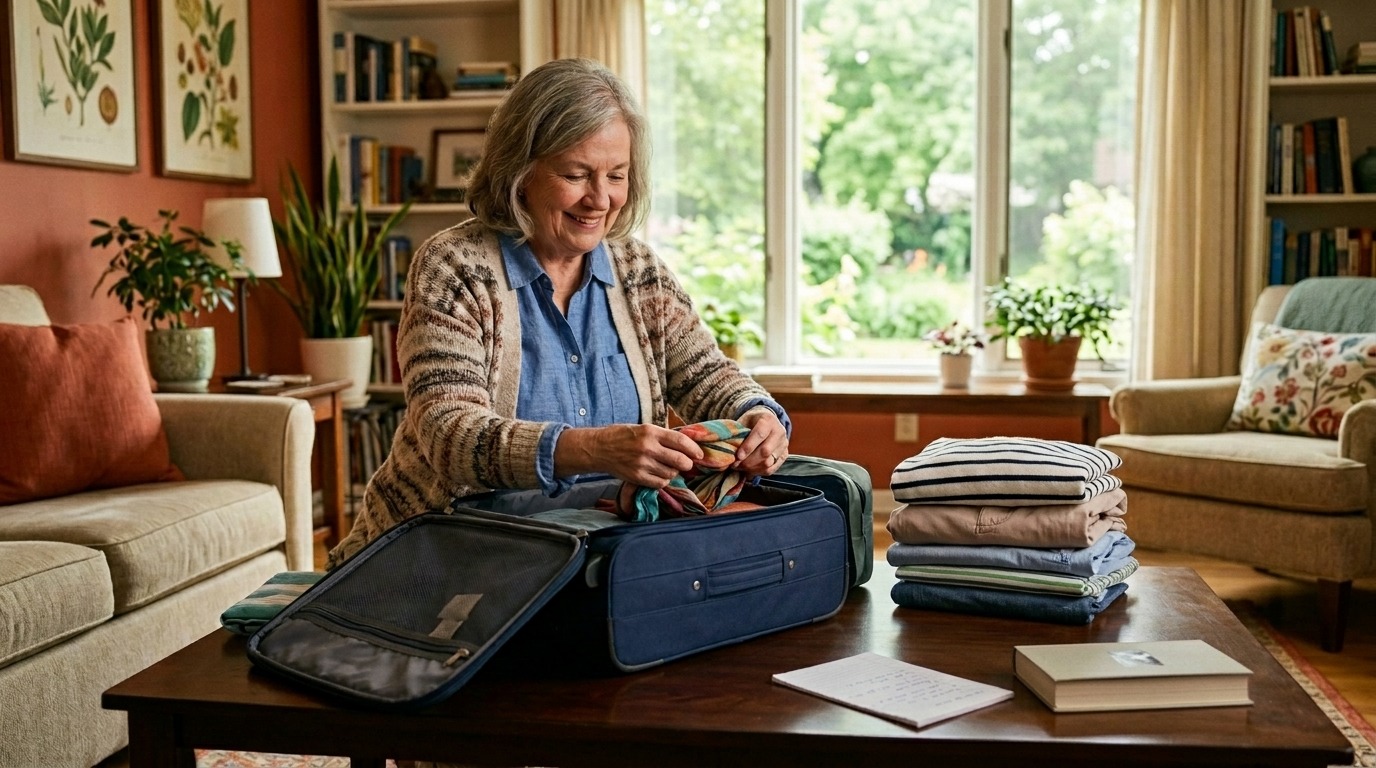
Plan to pack 5-7 days of comfortable, easy-to-wear outfits. Loose-fitting clothes with elastic waistbands or simple closures are easier to put on and take off independently. Include layers like a light cardigan or zip-up, since indoor temperatures can vary from room to room.
Non-slip footwear is important for safe movement around the community. A pair of supportive sneakers and a pair of non-slip slippers cover most daily needs. Avoid shoes with long laces or slick soles that could become a hazard.
Personal Care Supplies
Bring the toiletries, skincare products, and grooming items your loved one uses every day. Familiar scents and routines help people feel at home, especially during the first few days of any new environment. Pack full-sized products when possible so nothing runs out mid-stay.
Label every item clearly with your loved one’s name using a permanent marker or printed labels. This simple step reduces confusion and helps staff return anything that gets misplaced. A small toiletry bag keeps everything organized and easy to find.
Medications and Health-Related Items
Bring a written list of all current medications, including the exact dosage and the time of day each one is taken. This helps the care team manage your loved one’s routine accurately from day one. If your loved one takes any supplements, include those on the list as well.
Pack all necessary health aids like glasses, hearing aids, and any mobility equipment they rely on daily. Make sure hearing aid batteries are fresh and that glasses are in a labeled, protective case. These items are easy to overlook in the rush of packing but make a big difference in your loved one’s comfort and ability to manage daily activities on their own.

Comfort Items and Personal Touches
Items That Feel Like Home
A familiar blanket, a favorite pillow, or a small household item can make a new space feel much more personal. Family photos in lightweight frames are a simple way to bring warmth to a room. These small touches help your loved one feel grounded and at ease.
Items for Memory Care Residents
For loved ones in memory care, familiar objects play an even bigger role in creating a sense of calm. Soft items like a well-loved stuffed animal or a simple music player loaded with favorite songs can provide real comfort throughout the day. Choose items that are soothing and easy to interact with.
Try to avoid bringing items that look similar to multiple objects or that could create confusion. Keeping the selection simple and meaningful tends to work better than packing too much. A calm, familiar environment supports a smoother adjustment.
What to Leave at Home and Final Checklist Tips
Leave jewelry, large amounts of cash, and any sentimental items that would be hard to replace if lost. A respite stay is temporary, and it’s not worth the risk of losing something irreplaceable. Keep valuables safe at home until your loved one returns.
Print a physical checklist before packing to stay organized and avoid last-minute scrambling. Check off each item as it goes into the bag so nothing gets forgotten. A calm, prepared move-in day starts with a plan.
How The Reserve at Oswego Can Help Your Family Take the Next Step
A respite stay at The Reserve at Oswego gives your loved one a real look at what daily life in a warm, supportive senior living community feels like. You can observe the care firsthand, ask questions, and get a genuine sense of whether it’s the right fit for your family’s long-term needs.
Many families find that a short stay helps ease the transition to long-term senior living by making something unfamiliar feel comfortable. Schedule a personal tour to learn more about respite care options and see the community for yourself today.